Viktor Washington · 2 September 2026
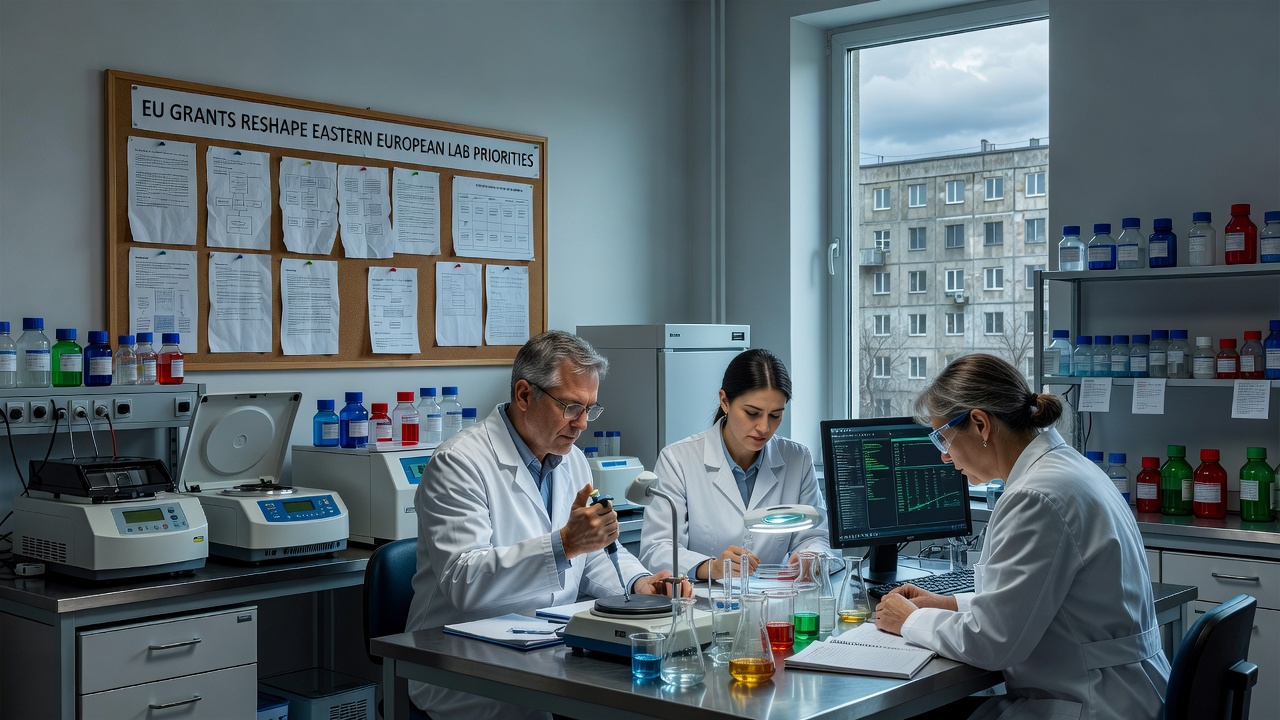
European Union research grants are prompting universities and research centers across Eastern Europe to realign laboratory priorities toward sustainability, digital innovation, and interdisciplinary collaboration. Institutions in Poland, Hungary, and the Czech Republic have reported notable increases in funding allocations that favor projects addressing climate resilience and advanced materials science.
Shifts in Research Focus
At institutions such as Warsaw University of Technology and Charles University in Prague, laboratory directors indicate that EU framework programs now require explicit integration of green chemistry and artificial intelligence applications. This has led to the decommissioning of older equipment dedicated to traditional fossil fuel analysis in favor of high-throughput sequencing tools and renewable energy testbeds. Faculty members note that grant applications must demonstrate measurable contributions to the European Green Deal, resulting in revised hiring patterns that prioritize expertise in data analytics over classical experimental chemistry.
Funding streams from Horizon Europe have also encouraged cross-border consortia, allowing smaller laboratories in Romania and Bulgaria to access shared facilities in Germany and the Netherlands. These partnerships have accelerated the adoption of standardized protocols for carbon capture research and bio-based polymer development. Laboratory managers report that administrative overhead has increased due to stringent reporting requirements, yet the influx of capital has enabled modernization of aging infrastructure built during the post-communist transition period.
Implications for Eastern Europe
Analysts observe that the reorientation of laboratory priorities is gradually narrowing the research capacity gap between Western and Eastern member states. Eastern institutions are securing higher success rates in competitive calls focused on digital twins and circular economy models, areas where regional industrial strengths in manufacturing provide natural advantages. However, concerns persist regarding brain drain, as skilled researchers are attracted to better-resourced Western facilities despite local salary improvements funded by EU grants.
University administrators emphasize that sustained investment will be necessary to maintain momentum. They advocate for continued emphasis on training programs that equip early-career scientists with grant-writing and project-management skills. The ongoing transformation suggests that Eastern European laboratories are positioning themselves as key contributors to pan-European scientific objectives rather than peripheral participants.