Wendy Richter · 20 September 2026
Government Backing for Climate Studies Expands Alongside Shifts in Worldwide Student Movement Patterns
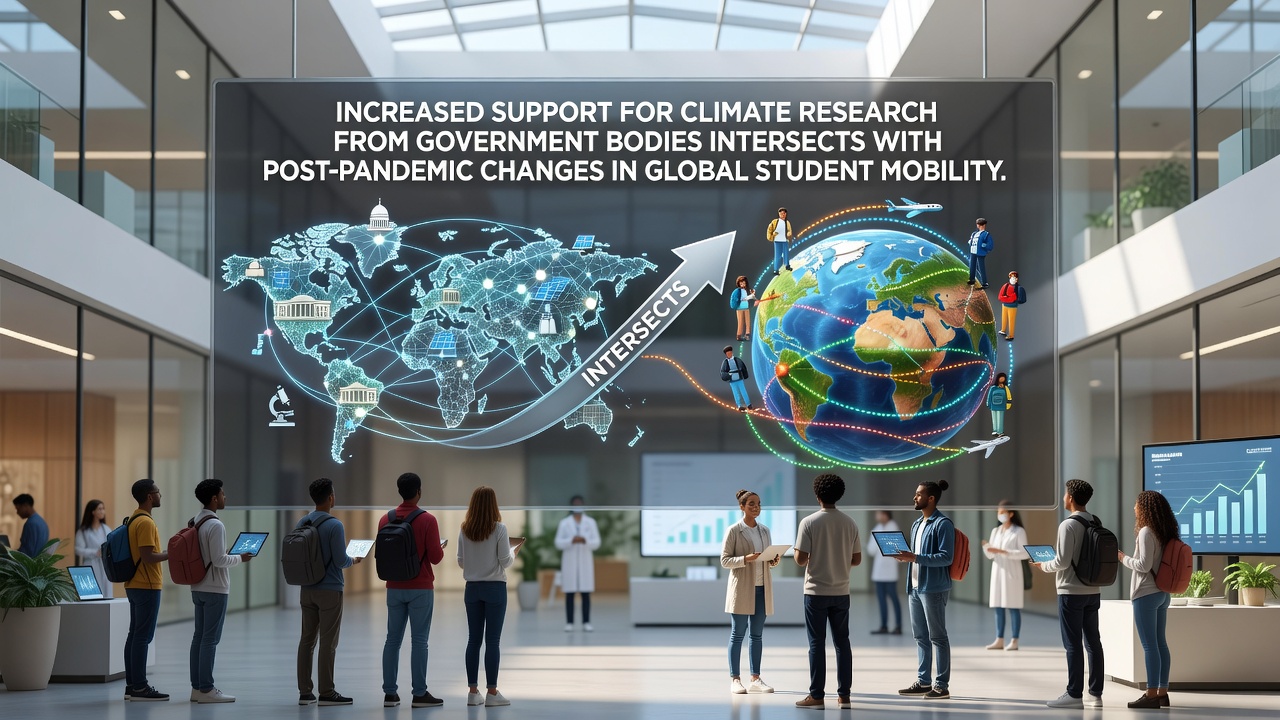
Funding allocations from multiple national agencies have grown steadily in recent years, and this expansion coincides with measurable changes in how students cross borders for higher education after the global health crisis subsided. Agencies in North America, Europe, and the Asia-Pacific region have directed larger shares of research budgets toward climate-related projects, while enrollment data from international education bodies show altered destination preferences and program choices among mobile learners.
Funding Trends Across Major Economies
National science foundations and environment ministries have reported year-over-year increases in grants for atmospheric modeling, renewable energy systems, and ecosystem monitoring since 2021, and these commitments continue into the current cycle. The United States National Science Foundation allocated additional resources through its climate research directorate in fiscal year 2025, while parallel programs under the European Union's Horizon Europe framework extended support for collaborative climate networks spanning multiple member states. Australian government departments similarly expanded their climate adaptation research streams, directing funds toward institutions that host large cohorts of international postgraduate students.
Observers note that these allocations often include provisions for international partnerships, which in turn influence where students decide to pursue advanced degrees. Data compiled by education ministries in Canada and the United Kingdom indicate that scholarship schemes tied to climate topics attracted rising numbers of applicants from South Asia and Latin America during the 2024-2025 academic year.
Post-Pandemic Mobility Patterns
Global student movement recovered unevenly after travel restrictions lifted, and several source countries recorded sustained interest in programs focused on environmental science and sustainability policy. Enrollment figures released by the Institute of International Education and comparable agencies in Australia reveal that fields such as climate modeling and renewable resource management experienced higher growth rates than many other disciplines between 2022 and 2025. Students from regions already experiencing visible climate impacts appear more likely to select destinations offering specialized laboratories and government-supported field research opportunities.
Visa processing data from multiple receiving countries show that applications for research-oriented master's and doctoral programs in climate fields rose faster than applications for business or engineering tracks during the same period. This pattern holds even as overall international enrollment in some traditional host nations stabilized rather than returned fully to pre-2020 levels.
Intersection Points Between Funding and Mobility
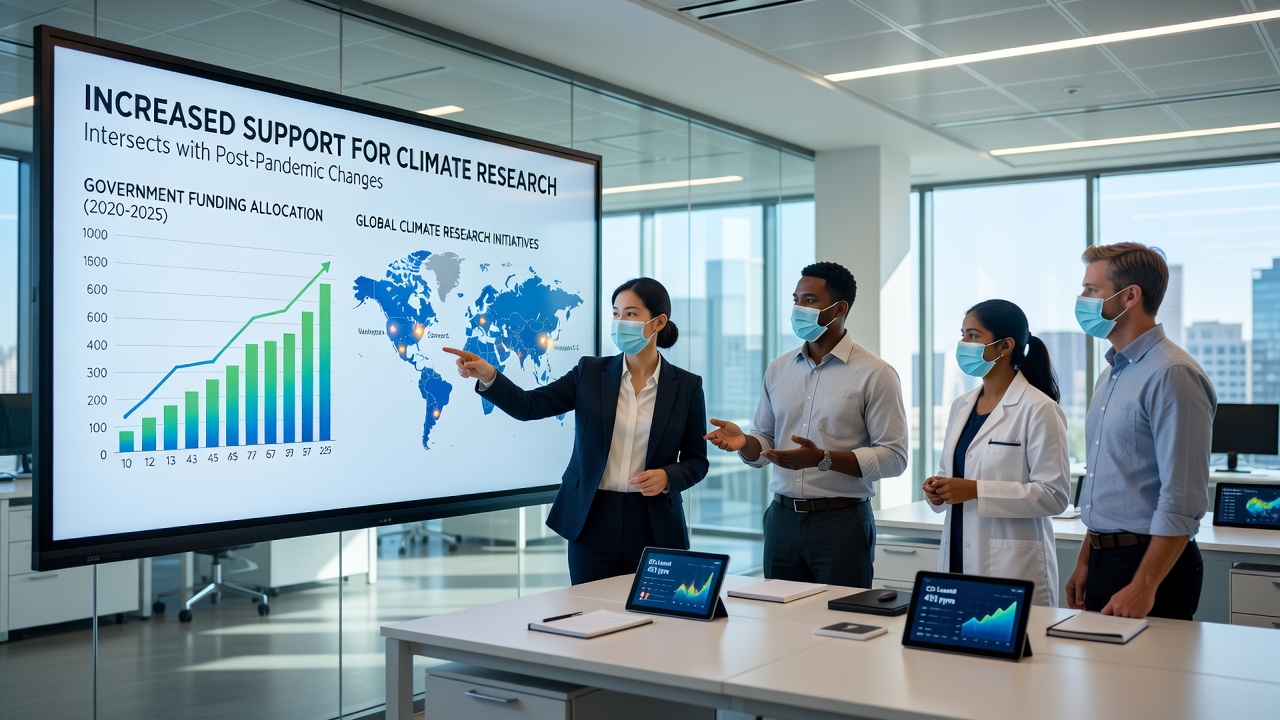
Joint initiatives announced in early 2025 illustrate how government climate investments intersect with student flows. Programs that combine research grants with dedicated places for international researchers have appeared in several countries, and these arrangements frequently require participants to spend time at partner institutions abroad. A September 2026 funding round scheduled by a consortium of European and North American agencies will include earmarked support for student exchanges focused on coastal resilience and carbon monitoring projects.
Universities that secured larger climate research portfolios report corresponding increases in applications from overseas candidates seeking thesis supervision in those areas. Placement records from institutions in Germany and the Netherlands show that students arriving through climate-specific pathways often remain for longer degree cycles and transition into local research positions after graduation more frequently than peers in non-funded fields. Government statistical releases from New Zealand document similar trends among Pacific Island students enrolled in climate adaptation programs.
Yet the alignment is not uniform. Some source countries continue to prioritize domestic capacity building, and their scholarship programs direct students toward shorter stays or virtual components rather than full-degree mobility. Analysts tracking these flows point to differences in how funding conditions are structured across jurisdictions as one factor shaping the resulting student distribution.
Regional Variations and Data Sources
North American agencies have emphasized large-scale observational networks that require international data contributions, and this emphasis draws students from countries participating in those networks. European programs often tie funding to cross-border consortia, which creates predictable pathways for students moving between member institutions. In contrast, several Asia-Pacific governments have channeled support into national centers that still recruit overseas researchers on fixed-term contracts, producing shorter mobility episodes.
Figures released by the Organisation for Economic Co-operation and Development and national education departments indicate that the share of international students enrolled in environment-related disciplines rose from roughly 8 percent in 2019 to over 12 percent in 2025 across reporting countries. These shifts occur alongside stable or declining numbers in other STEM categories at some universities, suggesting a reallocation of mobility rather than uniform growth.
Conclusion
The convergence of expanded government support for climate research and evolving post-pandemic student mobility patterns continues to shape enrollment and research collaboration decisions. Data from multiple government and international education sources document increased funding streams that frequently incorporate international components, while student movement statistics reveal growing interest in climate-focused programs at institutions benefiting from those funds. Future reporting cycles, including the September 2026 announcements, will clarify whether these intersections produce lasting changes in global research capacity and student distribution across regions.