Ellis Berger · 6 September 2026
Remote Community Hubs Advance Technology Initiatives Despite Enduring Connectivity Shortfalls
Remote community hubs continue rolling out digital platforms for education, healthcare coordination, and administrative services even as broadband access and reliable power supplies remain uneven across many countryside regions, and data from multiple monitoring bodies show that coverage gaps affect implementation timelines in measurable ways.
According to figures released by the Federal Communications Commission, approximately 14 percent of rural households in the United States still lack access to fixed broadband at speeds of 25 megabits per second or higher as of late 2025, which creates direct constraints for institutions attempting to host real-time video consultations or cloud-based record systems.
Infrastructure Realities Shape Rollout Schedules
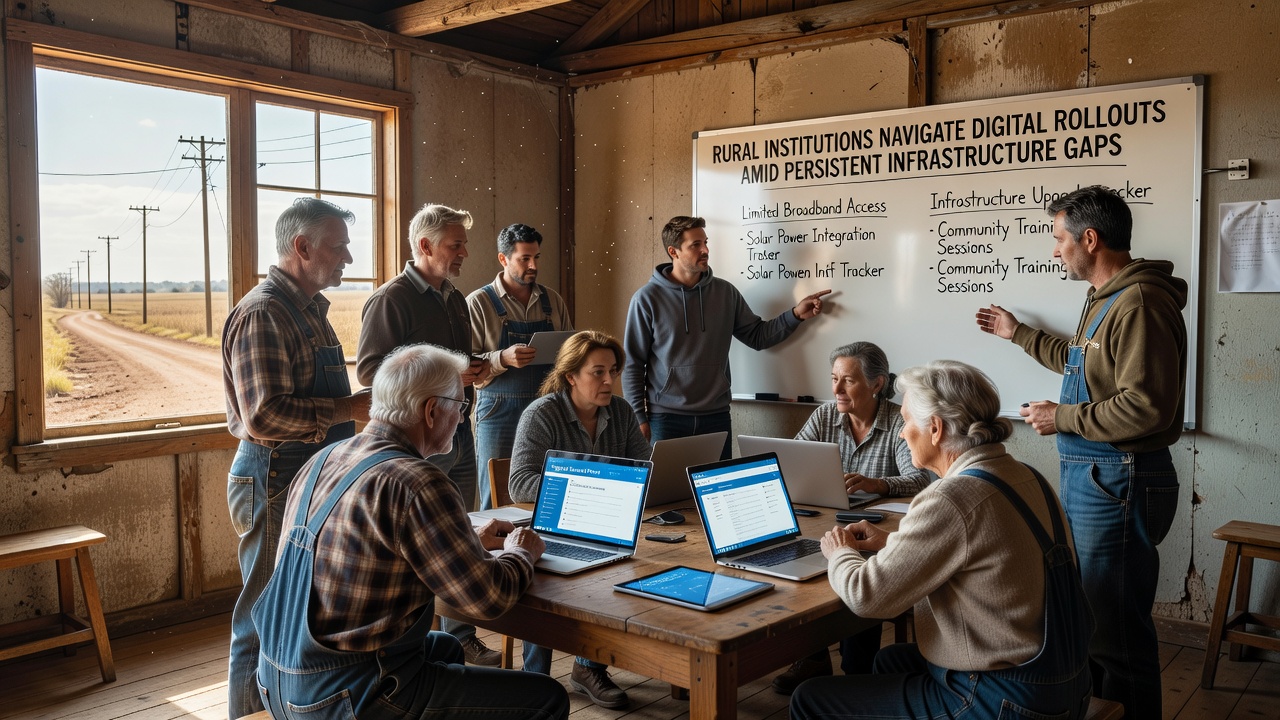
Local administrators report that installation crews often encounter repeated delays when fiber lines must cross agricultural land or when electrical substations require upgrades before servers can operate without frequent outages, while researchers tracking these projects note that such sequential dependencies extend project durations by several months on average.
One study conducted across multiple districts in central Canada found that institutions located more than 50 kilometers from the nearest fiber node experienced median deployment times 1.8 times longer than those nearer urban corridors, and the same analysis linked these extended timelines to higher per-user costs once maintenance contracts entered the picture.
September 2026 Targets Highlight Progress adn Remaining Gaps
National programs in several countries have set connectivity benchmarks for September 2026, including minimum speed thresholds and device provisioning goals for public facilities, yet preliminary assessments indicate that roughly one-third of targeted rural sites may require phased rather than simultaneous activation because of lingering backhaul limitations.
Observers tracking European regional development programs note that similar deadlines have prompted accelerated permitting processes in some areas, allowing community colleges and regional clinics to begin pilot phases of learning management systems and telemedicine interfaces even while full fiber connections remain pending.
Adaptation Strategies Emerge from Practical Constraints
Institutions frequently combine satellite links with existing copper lines or mobile hotspots to maintain basic functionality during transition periods, and case reviews compiled by academic teams at several universities show that hybrid setups can sustain essential services such as student registration portals and prescription refill requests while permanent infrastructure catches up.
Data compiled by the Australian Department of Infrastructure, Transport, Regional Development, Communications and the Arts indicate that rural libraries using such interim arrangements handled 22 percent more public digital literacy sessions in the first half of 2025 compared with the prior year, demonstrating measurable uptake even under constrained conditions.
Training and Support Networks Fill Knowledge Gaps
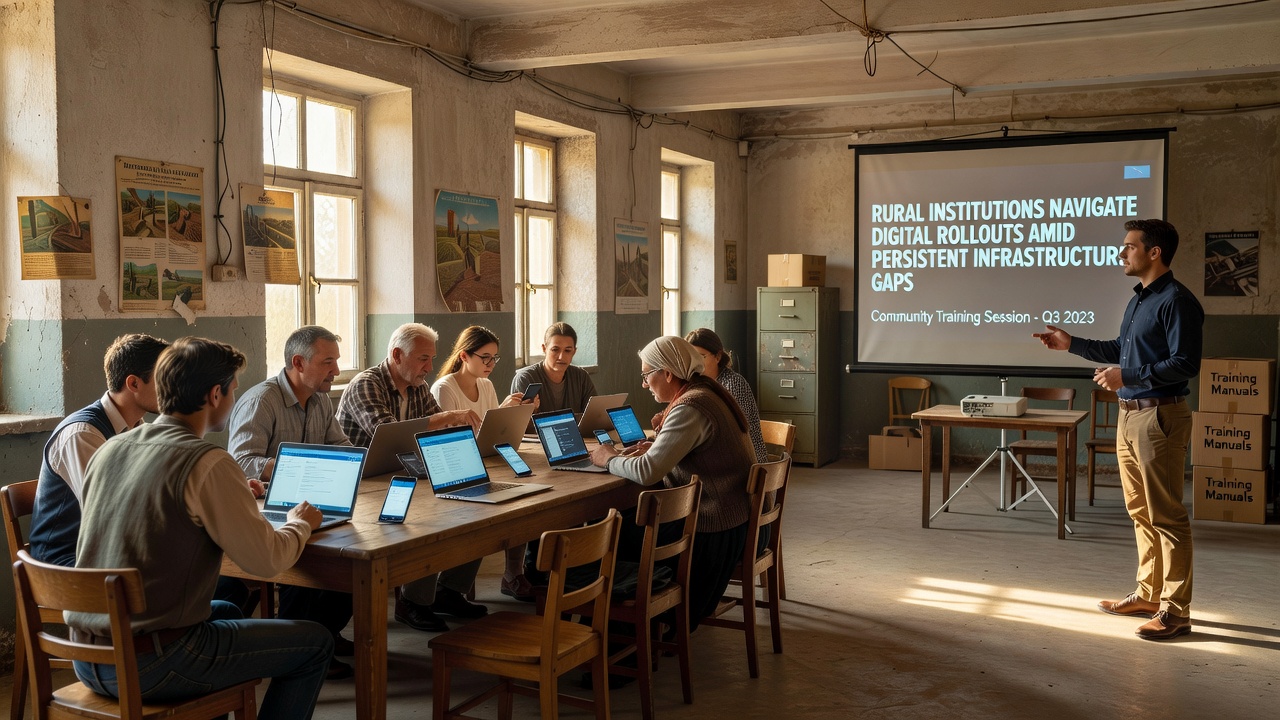
Regional training consortia have expanded workshops that focus on optimizing low-bandwidth applications and scheduling data-intensive tasks during off-peak hours, and participants from multiple counties report that these sessions reduce the frequency of connection-related interruptions once staff apply the techniques consistently.
Evidence gathered through longitudinal surveys suggests that facilities investing in local technical coordinators achieve higher completion rates for digital service launches, since on-site troubleshooting replaces reliance on distant support centers that may lack familiarity with rural network quirks.
Conclusion
Remote institutions continue integrating digital tools into daily operations while infrastructure shortfalls persist, and available statistics demonstrate both incremental gains in coverage and the ongoing need for adaptive approaches that match available connectivity levels.
Coordinated efforts among government agencies, research institutions, and local operators have produced documented improvements in service delivery metrics, yet the same records show that full parity with urban benchmarks will depend on sustained investment in last-mile infrastructure through and beyond the 2026 planning horizon.