Ulrich Friedrich · 18 October 2026
Rural Digital Barriers Spark Fresh Pedagogical Trials as Gender Gaps and Enrollment Shifts Converge in Climate Research Programs
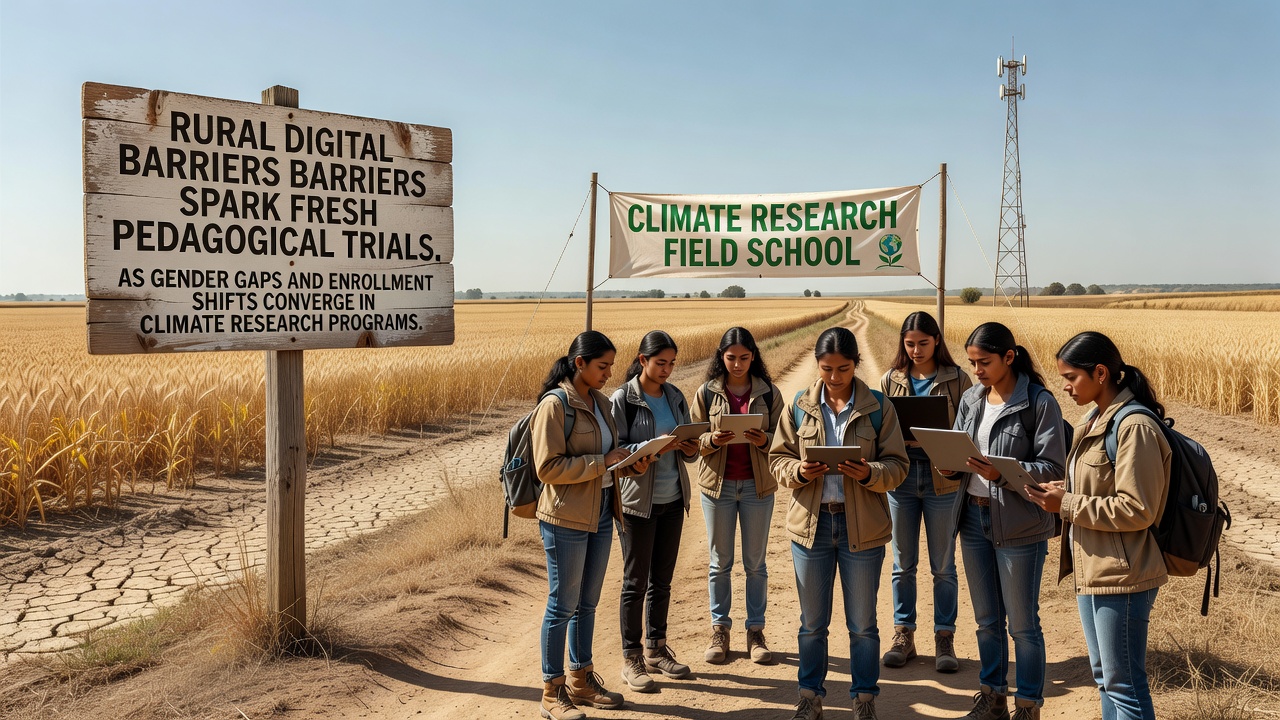
Digital infrastructure gaps in rural regions continue to shape access to advanced climate research training, and institutions have responded with targeted pedagogical experiments that blend offline modules, mobile data hubs, and community-based field work. Data from multiple international monitoring bodies show that students in remote areas encounter upload and download speeds well below thresholds required for real-time modeling software or large dataset transfers common in climate studies. These constraints coincide with documented shifts in enrollment patterns, where female participation in graduate climate programs has fluctuated in several countries while overall numbers reflect changing mobility trends among international applicants.
Connectivity Shortfalls Drive Method Adjustments
Researchers tracking educational delivery in rural zones report that limited broadband forces programs to redesign core components of climate curricula, replacing live cloud simulations with pre-loaded datasets delivered via portable drives or scheduled satellite links. Studies released in 2025 by regional education agencies indicate that 38 percent of climate-focused master's programs in affected districts now incorporate hybrid formats, with instructors combining in-person fieldwork during favorable weather windows and asynchronous analysis tasks completed on local servers. Observers note that these adaptations emerged after repeated connectivity failures disrupted synchronous sessions during the 2024 academic year, prompting several universities to pilot low-bandwidth platforms developed in partnership with national research councils.
Gender Participation Patterns and Enrollment Dynamics
Figures compiled by academic consortia reveal that gender enrollment ratios in climate research tracks vary by region, with some rural institutions recording a 12 percent decline in female applicants between 2023 and 2025 while urban counterparts maintained steadier numbers. Program administrators cite transportation costs, family responsibilities, and uneven access to prerequisite digital skills training as contributing factors documented in applicant surveys. At the same time, overall enrollment in climate-related degrees has shown modest growth in select European and North American cohorts, driven partly by policy incentives that prioritize environmental workforce development. Data released by the OECD in its education indicators series highlight that scholarship distribution and mentorship availability correlate with improved retention rates among underrepresented groups in these fields.
One longitudinal review conducted across Eastern European partner institutions found that targeted outreach campaigns conducted in secondary schools raised awareness of climate career pathways and produced measurable increases in applications from rural female students by the start of the 2026 intake cycle. Such initiatives often pair virtual information sessions with in-person workshops held at regional centers equipped with temporary high-speed connections.
Pedagogical Experiments Underway
Universities have introduced several trial approaches to mitigate the combined effects of infrastructure limits and demographic shifts. Mobile learning units equipped with ruggedized tablets and solar chargers allow field teams to collect and process environmental data without constant internet access, then synchronize findings during brief visits to equipped hubs. Curriculum designers have also embedded modular content that functions offline, enabling students to complete statistical analysis exercises or scenario modeling before uploading results during scheduled connectivity windows. A Canadian federal education report from spring 2026 documented similar pilots in remote northern communities, where enrollment in climate science tracks rose after institutions introduced these flexible delivery models.
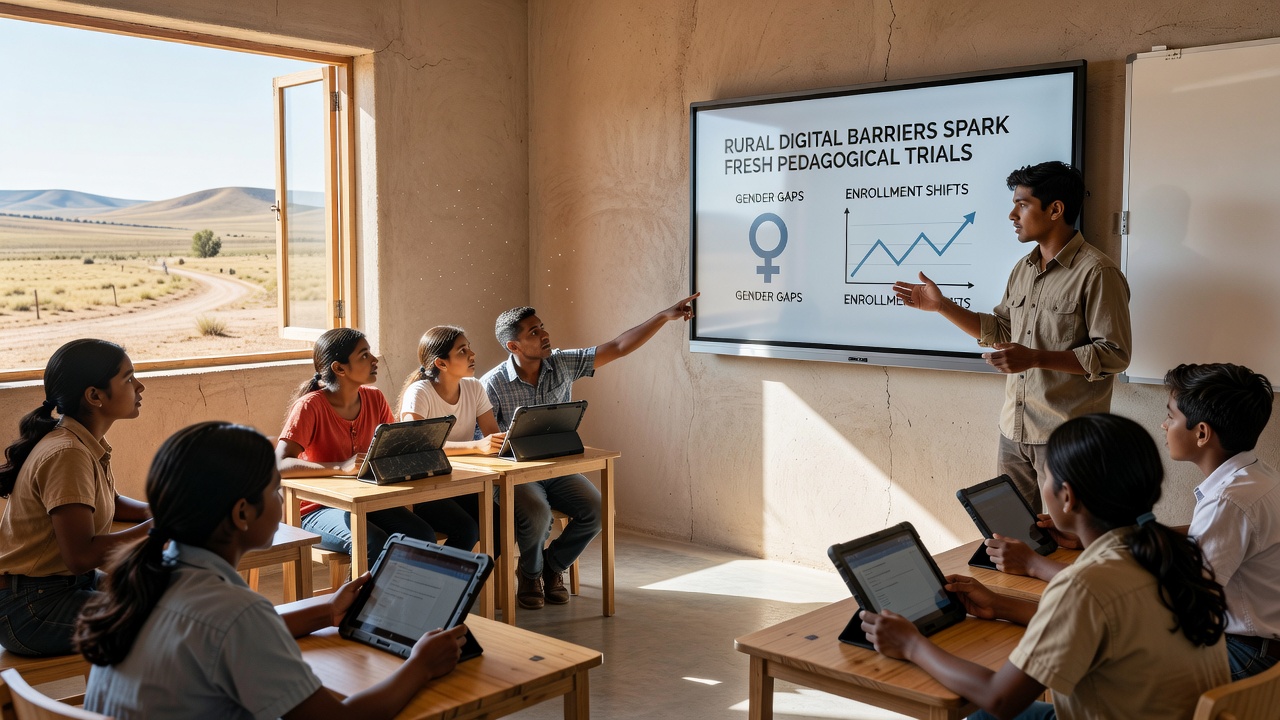
Faculty members involved in these trials emphasize iterative testing, adjusting session lengths and data compression techniques based on performance logs collected from participating cohorts. Programs in Australia have adopted comparable strategies, integrating local Indigenous knowledge frameworks into climate modules delivered through community radio and printed companion guides when digital transmission proves unreliable.
October 2026 Developments and Broader Context
By October 2026, several multilateral forums had scheduled reviews of progress on digital equity in higher education, with climate research training featured as a priority case study. Preliminary summaries shared by participating agencies indicate that enrollment stabilization measures, including expanded regional satellite campuses and revised admission timelines, coincided with modest gains in female representation within rural-sourced applicant pools. National statistical offices in multiple countries continue to track these variables, supplying datasets that allow cross-comparison of infrastructure investment outcomes against participation metrics.
Conclusion
Evidence assembled from education monitoring organizations and institutional reports demonstrates that rural digital barriers have prompted measurable changes in how climate research programs structure instruction and outreach. Gender enrollment variations and broader shifts in student movement patterns intersect with these infrastructure realities, leading to continued experimentation with hybrid and offline pedagogical formats. Ongoing data collection through established international channels will provide further clarity on the effectiveness of these adjustments as institutions refine delivery methods in response to documented access constraints.